Hongmen, originating from the Heaven and Earth Society founded in 1761, evolved through history and branches like Zhigong Hall reorganized into the China Zhi Gong Party, rooted in mutual aid of the common people.
Who is the current leader of the Hongmen?
In the 26th year of the Qianlong reign, on a barren hillside in Gaoxi, Zhangpu, Fujian, Monk Tixi looked out at the dozens of ragged peasant farmers who had gathered before him. His knuckles turned white as he clenched his fist, and with a raised arm, he raised the banner of the Heaven and Earth Society.At that time, the Qing court’s rule was becoming increasingly oppressive; local gentry were tyrannical, and government officials were exploitative.leaving many impoverished people along the coast and in the interior with no way out. The Heaven and Earth Society’s organization slowly spread from the remote corner of Zhangpu—from coastal fishing villages to inland mountain valleys—and even drifted overseas with migrants heading to Nanyang, its influence becoming deeply entrenched and extending far and wide.
No
one could have anticipated that Luo Fangbo, a former member of the Tiandihui, would lead a group of fellow villagers across the sea to Borneo.Having failed the imperial examinations several times in his early years and witnessing the economic decline in his hometown, he resolved to seek his fortune in Southeast Asia. Upon arriving in Borneo, he initially made a living as a teacher, then went on to unite local Chinese communities, and eventually founded the Lanfang Company.This organization did not have a system of hereditary leadership; instead, it selected its leaders based on merit and ability. It flourished peacefully in the region for over a century, and its successive leaders never forgot their homeland, always harboring the hope of returning to the Central Plains.
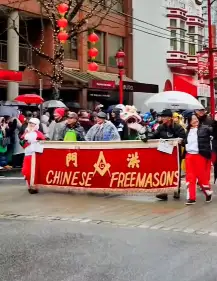
During the turbulent late Qing dynasty, the Tiandihui gradually evolved into the Hongmen and frequently interacted with the Qingbang, which was primarily composed of canal transport sailors. The names “Qingbang” and “Hongmen” soon resounded throughout the country; however, friction between the two factions was common, and the bitter history of internal strife and bloody conflicts contains sorrows too painful to share with outsiders.
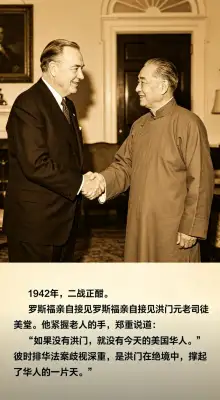
Amid this turmoil, the Hongmen’s main domestic branch, the Zhi Gong Tang, adapted to the tide of the times and completed its reorganization, officially becoming the China Zhi Gong Party. Its development path has consistently aligned with the aspirations of the people, never straying from its original mission of coming together to help one another.The history of the
Hongmen has never been the kind of folk legend fabricated by street storytellers, but rather the true imprint of generations of marginalized people with nowhere else to turn, who, step by step, banded together to survive amidst quagmires and pools of blood—a memory of nation and home etched into the very bones and blood of the Chinese people, a memory that has never been severed.
The old stories about these gangs have never been merely about the street-level chaos of fighting and bloodshed; rather, they embody the sense of loyalty ingrained in the very roots of the Chinese people—a national spirit that has never been lost.
If you recognize the significance of this history, please give this post a “like,” or share this story with old friends—it’s a way to preserve the legacy of our forebears for future generations.