Huang Chao, a frustrated scholar, led the rebellion that shattered centuries-old aristocratic privileges, opening the imperial exam system to commoners and clearing a path for ordinary people to rise.
Where the blade struck, crimson blood spattered across the streets of Chang’an, and the old debts accumulated over three hundred years by the Cui, Lu, Li, and Zheng clans were all settled that very day.
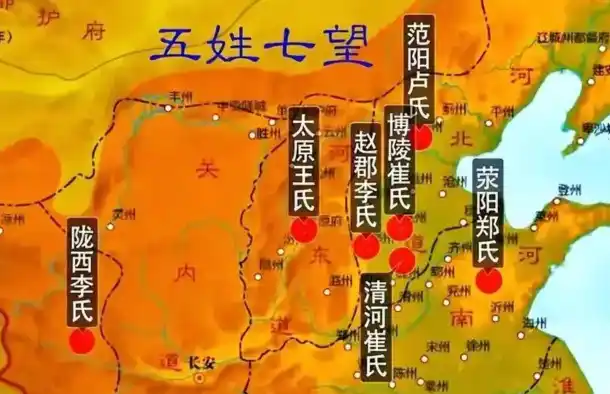
The older generation has long heard of the authority wielded by the aristocratic clans of bygone eras; for centuries, these families held such lofty status that even the sovereign had to yield to them.During the three centuries of the Late Tang Dynasty, the scions of these aristocratic families, by virtue of their lineage and birth, occupied key positions from the moment they were born. The best farmland was entirely monopolized by them, and the media—the mouthpieces of public opinion—were firmly under their control. Even if young men from humble backgrounds possessed the talent to serve the state, they found it difficult to cross the threshold into officialdom; the imperial examinations were nothing more than a hollow facade.Under the crushing weight of social stratification, resentment among the common people had long been simmering.
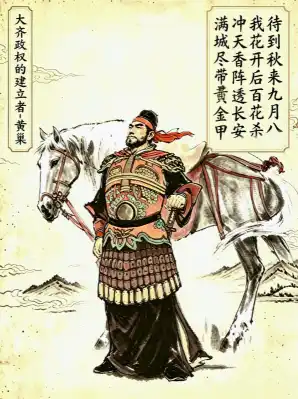
No one could have anticipated that the leader of the uprising would be Huang Chao, a scholar from a poor family who had devoted his entire life to studying the classics. Year after year, he traveled with his books to take the imperial examinations, only to fail every time. With his aspirations to serve his country completely dashed, he finally cast aside his brush, rallied the masses, and rebelled against the Tang Dynasty.
After the rebel forces stormed the Daming Palace, Huang Chao—having grown accustomed to the arrogance ingrained in the very bones of the aristocratic clans—did not take matters into his own hands. Instead, he handed over the authority to mete out justice to the common people, who had been oppressed for generations.The injustices that had accumulated over hundreds of years and the long-suppressed resentment were all finally resolved on that day.
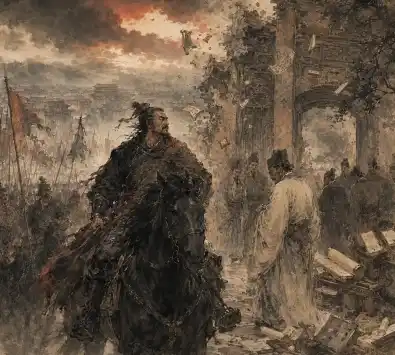
Anyone who lived through that era understands just how agonizing it is to be oppressed and have no avenue for appeal. The foundations of those powerful clans, built up over hundreds of years, came crashing down in an instant, and the mountain of oppression that had weighed on the common people for generations was finally lifted in a single day.
Following this campaign, the privileges of the hereditary nobility came to a definitive end, and the imperial examination system—which had previously been little more than a formality—truly became a formal channel through which the children of ordinary families could secure a future through education. From that point on, Chinese history entered an era in which the common people could hold their heads high.Although Huang Chao ultimately suffered defeat and met his end, his efforts to uphold justice for the common people have not only been passed down by word of mouth among older generations to this day but have also left a clear and indelible mark in the annals of history.
If Huang Chao had passed the imperial examinations back then, how much longer would it have taken to break the deep-rooted system of aristocratic clans that had weighed down on the common people for hundreds of years?
Looking back on the many hardships and obstacles we’ve faced over the years, had no one dared to be the first to break through those barriers, who knows how much longer we would have had to endure them. Not shying away when it’s time to stand up, and not remaining silent when it’s time to uphold justice—these have always been the principles passed down from generation to generation.