Xiang Yingxin, a former military intelligence agent, was locked in a mental hospital in Chongqing in 1947 and left for Hong Kong two years later, leaving the rest of her life a mystery.
In the winter of 1947, at a mental hospital on the outskirts of Chongqing, the heavy iron gate clanged shut as it was locked. A woman wearing a blue cotton prison uniform, washed until it was faded white, dug her fingertips deep into the cracks between the bricks at the base of the wall. Her knuckles turned white, and even as blood seeped from them, she did not let go one bit.
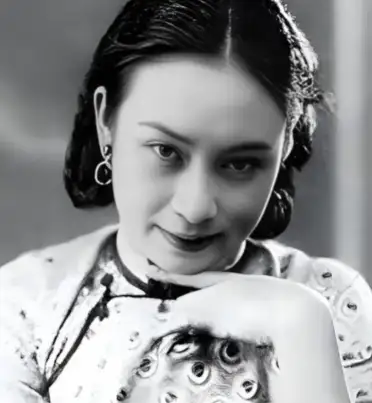
This is Xiang Yingxin, the “Clan Beauty” whom everyone in the Military Intelligence Bureau once held in high regard. Born into a family of local gentry in Huxian County, Shaanxi, she had a fiercer temperament than most from a young age.Before she even turned twenty, she defied her family’s opposition to call off her engagement to a fellow villager and insisted on becoming the concubine of Hu Yifa, a commander in the Northwest Army who was ten years older than her father and already had three concubines. She then followed the troops as they made their way into Sichuan, and later traveled alone for three days in a stuffy freight car to reach Wuhan.She had an innate knack for navigating social circles; she understood perfectly the proper boundaries at the dinner table and the interests and power dynamics among various factions. Within a few years, she had become a figure in social circles whom no one dared to treat lightly. Later, she caught the eye of Dai Li, who recruited her into the Military Intelligence Bureau (Military Intelligence Directorate), where she controlled several exclusive intelligence channels.
During the assassination attempt on Yin Rugeng, she disguised herself as a servant to infiltrate Yin’s mansion; she had already pressed a dagger against his Adam’s apple when, as fate would have it, she was caught in the act by one of his bodyguards.After the mission failed, she evaded capture by making her way through three different docks. She hid for two full days and nights without daring to close her eyes. By the time she rushed back to Chongqing, half the heel of her shoe had broken off, and her pant legs were still splattered with mud—yet she calmly handed the security layout of Yin’s mansion to Dai Li.From then on, no one ever again viewed her as nothing more than a decorative “flower vase” meant for entertaining guests. Whenever Dai Li spoke of her, he would always say, “This woman has a steel will.”
No one could have anticipated that, just three days before the incident involving Dai Li, he had instructed Mao Renfeng to transfer Xiang Yingxin to Shanghai to head the intelligence station there.A plane crash shattered all those plans. No sooner had Mao Renfeng taken possession of the Military Intelligence Bureau’s seal than he fabricated a story about her having lost her mind and had her sent straight to this sunless asylum, where she was confined for two years.
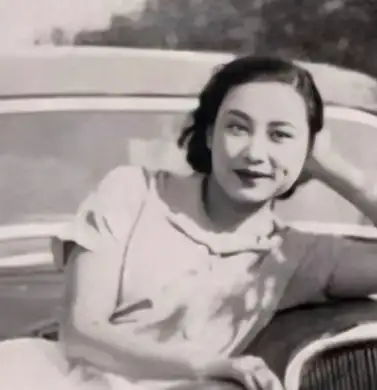
Over
the past two years, she had counted the days by the grout lines in the bricks on the wall. Her gums had swollen from gnawing on cold, hard cornbread, and she spent longer and longer periods staring blankly at the iron gate. The grout lines between those few bricks at the base of the wall had been worn down and distorted by her fingernails.
In the fall of 1949, the iron gate swung open once more. A distant relative of her father’s stood outside, handing her a neatly folded, slightly worn cotton robe and saying just three words: “Let’s go—to Hong Kong.” Only then did the anxiety that had hung over her for two years finally lift.
No one knows which street or alley she lived on after arriving in Hong Kong, nor does anyone know whether her later life was smooth or fraught with hardship. All that is known is that her children eventually settled overseas one by one. When others asked them about their mother’s past, they would simply shake their heads and say they couldn’t remember.
Throughout her life, ever since she chose that path in her youth, she never left herself any room to turn back. In the end, she spent most of her life drifting from place to place. Whenever I come across this passage while poring over old records, I can’t help but think that in the end, the things we hold firmly in our own hands are what truly last.