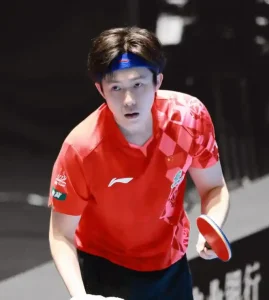
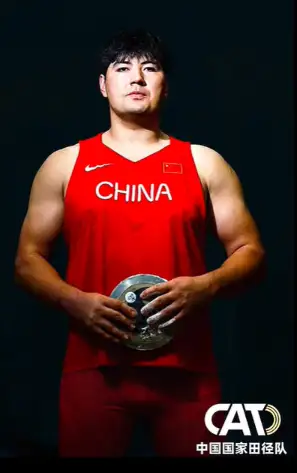
Abuduaini Tuergong, over two meters tall with an arm span exceeding his height, dominated Chinese discus for six years. Two years of technical adjustments stalled him—he missed Paris Olympics qualification. He gained nearly 30kg for explosive power, repeating throws thousands of times. After a 60.29m opener in Nagoya, his 64.26m third throw sealed gold. China swept gold and silver, ending a 24-year drought.
64.26 meters! The men’s discus clattered down onto the synthetic track at the Nagoya stadium. As the dull thud faded, the entire crowd rose to their feet in unison.
This heavyweight gold medal was the first won by Xinjiang athlete Abdulaini Turgun at the Nagoya Asian Games, and it marked the return of the Chinese men’s discus team to the top of the Asian Games podium after a full twenty-four years.

No one knew that the bronze medal he won at the Hangzhou Asian Games three years ago had weighed heavily on the heart of Abdulaini Turgun, a young man from Xinjiang, for a full 1,000 days.Standing just over two meters tall, with a wingspan even longer than his height, he had firmly held the top spot in the discus throw on the domestic circuit for six years, won two Asian Championships, and competed in two World Championships. Yet during those two years of technical adjustments, he felt like a jammed old clock—no matter how hard he wound it, it simply wouldn’t turn,He didn’t even come close to meeting the qualifying standards for the Paris Olympics. After late-night practice sessions, he would lean against the metal fence of the training ground and, more than once, ask himself against the backdrop of the deep night: Was this path truly a dead end?
He didn’t let a single bit of that pent-up determination escape; he channeled it all back into the training grounds of Shufu County, Kashgar. The discus throw is a niche event—there aren’t many cameras following him, nor much applause waiting in advance—so he simply threw himself into training with that lump of hard iron in his hands.While others were desperately trying to lose weight to gain agility, he took the opposite approach under his coach’s guidance, using every pound of muscle he gained to build explosive power for his throws. Over the course of a single winter, he put on more than ten kilograms, eventually building nearly thirty kilograms of solid, hard muscle. He performed the throwing motion tens of thousands of times,He put everything else on the back burner, his eyes fixed solely on that arc that would send the discus flying farther.
In the first round of the Nagoya finals, he threw only 60.29 meters, placing him in the middle of the field, with absolutely no sign of a gold medal in sight.
On his third throw, he shifted his weight to the side, twisted his waist, and swung his arm; the discus whizzed past his ear, tracing an arc through the air that no one had anticipated.
64.26 meters!
He stood rooted to the spot, staring at the scoreboard, while his teammate Wu Nanjun rushed up right behind him—and just like that, the Chinese team had clinched both the gold and silver medals.
The regret from three years ago has been made up for, and the twenty-four-year gap has been filled. Those early mornings and late nights that no one saw, those repetitive motions that left my arms too sore to lift, and those agonizing moments when I almost gave up—all of it came to fruition in that single throw.
There’s no such thing as good luck that falls from the sky for no reason—it’s just that someone has turned their perseverance, unseen by others, into that crisp sound of success as they hit their target.