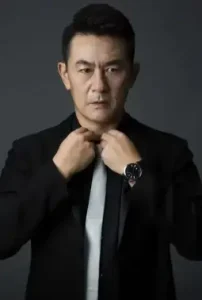
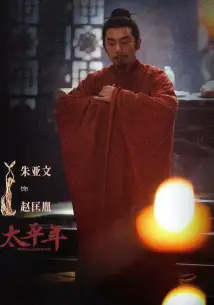
Zhu Yawen entered the industry in 2003, building a following as a leading man before voluntarily stepping back to supporting roles. He was nominated multiple times at Golden Rooster awards without winning, taking 23 years to earn his first mainstream trophy. In "Peaceful Years," he played Zhao Kuangyin with subtle expressions and restrained physicality, avoiding stereotypical emperor portrayals. On stage, he thanked cast and crew, calling fellow nominees all excellent.
At the Golden Eagle Awards ceremony, as soon as the winner of Best Supporting Actor was announced, Song Jia in the audience began to tear up; Zhu Yawen himself stood frozen in place, his eyes wide with surprise, while Yan Ni, looking completely bewildered, turned her head toward him.Lin Yongjian was the first to spring to his feet; he took a few steps forward and embraced the winner, who had just come to his senses. Hu Ge and Yu Hewei followed suit, rising to their feet and applauding, filling the venue with an unadorned, warm atmosphere.

Prior to the announcement, the frontrunners for the award were veteran actors like Lin Yongjian and Fu Dalong, who had been in the industry for many years; almost no one had guessed he would be the ultimate winner.
He entered the film and television industry in 2003 and built a substantial fan base in his early years with his rugged leading-man image.yet at the height of his career, he proactively turned down offers for leading roles and instead took on various low-profile supporting roles to focus on honing his acting skills. He was nominated multiple times for awards such as the Magnolia Awards and the Golden Rooster Awards but never won, and it took him 23 years in the industry to finally claim his first major film and television award.

In the TV series *The Year of Great Peace*, he plays Zhao Kuangyin,rather than relying on the stereotypical portrayal of emperors familiar to the public. Instead, through subtle shifts in the expression at the corners of his eyes and restrained body language, he effectively conveyed the complex emotions of a character in a position of power. It was precisely this performance that earned him this honor, which many had not expected him to win.
On stage, he thanked the cast and crew, both in front of and behind the scenes, one by one, and specifically mentioned that some viewers would scrutinize his performance against historical records. In subsequent media interviews, he simply stated that all the nominees were outstanding actors and that it would have been entirely reasonable for any of them to win.
This award not only recognizes his more than two decades of dedication to acting but has also helped him break through the limitations of his acting range, which had long been stagnant.
Today’s film and television industry no longer relies on “traffic” or “billing order” as core criteria for evaluation. There’s no need to deliberately vie for exposure; simply doing every task at hand with diligence is enough—as the old saying goes, “Gold will always shine.” This simple adage perfectly aligns with the professional code of conduct widely embraced by industry practitioners.
In my view, the path of steady, dedicated work is inherently more sustainable for professionals in the long run than blindly chasing popularity.