Fan Zhendong lost 2-3 to Kogami Shunsuke in German Cup 1/8, sparking public debate. We should evaluate different tournaments by separate standards rather than over-criticize the single loss.
In a surprise upset in the German Cup Round of 16, Fan Zhendong lost 2-3 to Shunsuke Togami, and former Chinese national table tennis coach Wu Jingping’s public statement in support of Fan sparked intense public debate.
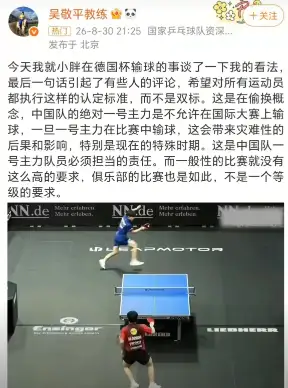
Fan Zhendong, who has long held the world No. 1 ranking, has competed in top international events such as the World Table Tennis Championships and the Olympics for many years, winning championships at every level and serving as the core player of the Chinese men’s table tennis team.This time, he is competing as a foreign player for a Bundesliga club; this is not an official international competition in which he is representing the national team. Given the nature of the event and the purpose of his participation, the criteria for evaluation should naturally be different.

The public has long grown accustomed to the Chinese national table tennis team routinely winning gold and silver medals at top-tier competitions. They often unconsciously apply the same standards used to evaluate performance in official tournaments to all types of events, failing to distinguish between the different natures of these competitions—which is what sparked this unnecessary public debate.
That five-game match against Shunsuke Togami was a closely contested battle from start to finish, with both players fighting tooth and nail for every point. In the end, the outcome came down to nothing more than a different choice on a single crucial play.
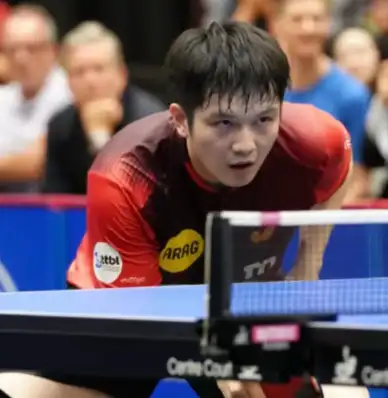
The very purpose of club competitions is to provide a platform for players to fine-tune their competitive form and build team chemistry. Fan Zhendong did his best to withstand the pressure throughout the match, which in itself deserves basic recognition; there is no need to be overly critical of him based on the outcome of a single match.
Don’t casually accuse others of making subjective assumptions, and you certainly shouldn’t use a single standard to judge all types of competitive arenas.
The Chinese men’s table tennis team is currently in a transitional phase of restructuring, and its performance in upcoming tournaments is drawing significant attention from the public.