China's men's team lost 2-3 to Japan in the Nagoya Asian Games final—their first team defeat to Japan since 1974. The eight-title streak and 36-year unbeaten record are over. Xinhua pointed to insufficient squad depth. Criticism initially targeted Liu Guoliang and players, but many soon realized blame couldn't rest on one person. The warning is clear: squad building and scheduling issues are fully exposed.
2–3: The Chinese men’s table tennis team lost.
The men’s team final at the Nagoya Asian Games on September 29, 2026, came to a close,the moment the scoreboard settled at 2–3, the cheers from the Japanese team inside the arena rang clearly through the screen, and many longtime fans watching the live broadcast instinctively clenched their thermoses, their hands frozen mid-motion.
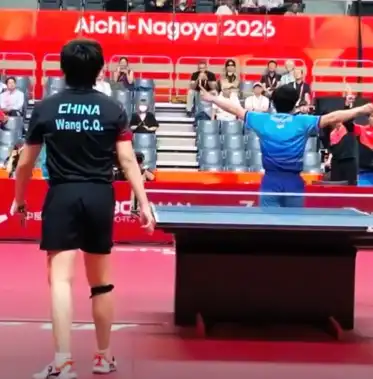
This defeat was more than just an ordinary loss in a tournament; it brought an end to the Chinese men’s table tennis team’s eight-consecutive-title streak at the Asian Games. Since first competing at the Asian Games in 1974, this marked the first time the Chinese team had lost to Japan in the men’s team event, bringing to an end a 36-year unbeaten streak against Japan.
The problems exposed after the match were laid bare: aside from Wang Chuqin, who had extensive experience in top-tier competitions, most of the other players were rookies making their Asian Games debut. In the final, Wen Ruibo lost two consecutive sets. The heavy price paid—using a top-tier competition as a learning experience for these newcomers—exceeded most people’s expectations.Xinhua News Agency published an article directly pointing out the team’s lack of depth. Immediately after the tournament ended, a wave of public criticism emerged, with most of the blame directed at Liu Guoliang and the participating players.

Many fans still remember the numerous honors Liu Guoliang led the team to win in previous years. Over the years, the public has long grown accustomed to seeing the Chinese national table tennis team standing on the top step of the podium; the higher the expectations had built up, the more acute the disappointment caused by this loss.
The criticism did not last long; as more people gradually regained their composure, they realized that this defeat could not be simply attributed to any one individual.
We can no longer overtax the competitive reserves of veteran players; instead, we must steadily build a talent pipeline and avoid using major tournaments as a testing ground for newcomers to make mistakes. This defeat is undoubtedly a wake-up call, serving as a timely reminder for the team to address its existing weaknesses as soon as possible.

The long-held perception
that the Chinese national table tennis team is a sure winner has long been shattered, and the long-standing issues in team development and tournament scheduling have been fully exposed by this defeat.
The Chinese national table tennis team still has a long way to go in terms of future team development and tournament planning.