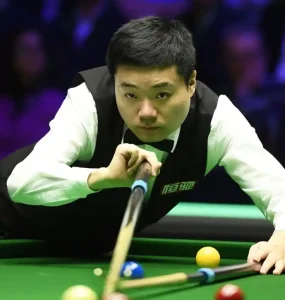
Zhuang Zedong, a legendary Chinese table tennis champion and key figure in Ping Pong Diplomacy, experienced both glorious peaks and tough lows in his lifetime, remaining true to his original aspiration all along.
In 2013, as Zhuang Zedong lay on his deathbed, he held his wife Atsuko Sasaki’s hand tightly until the very end, never closing his eyes.
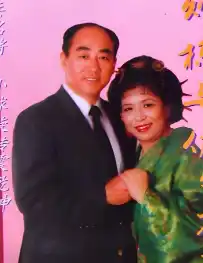
This veteran table tennis player, who once swept all the men’s singles titles at the World Table Tennis Championships and helped break the diplomatic ice between China and the United States through table tennis, found himself in rather dire straits during the final years of his life—he even had to struggle to raise the money to pay for his wife’s health insurance.
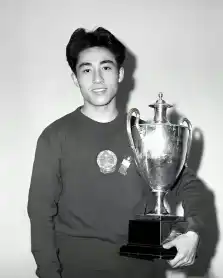
At the age of 19, he made his World Table Tennis Championships debut. With his fearless and tenacious spirit, he brought home the men’s singles championship trophy for the Chinese team—a title that had eluded them for more than a decade.Between 1961 and 1965, he achieved the unprecedented feat of winning three consecutive men’s singles titles at the World Table Tennis Championships. In recognition of this accomplishment, the International Table Tennis Federation (ITTF) specially commissioned an exact replica of the St. Brade Cup and presented it to him—an honor that remains unique in the entire history of the Chinese national table tennis team.
During the 1971 World Table Tennis Championships in Nagoya, Japan, American athlete Cohen accidentally boarded the Chinese team’s bus, leaving the entire group of accompanying staff momentarily stunned and at a loss.but Zhuang Zedong was the first to step forward and extend his hand to shake Cohen’s in greeting. It was this simple gesture that opened a crack in Sino-U.S. relations, which had been frozen for two decades, and the saying “the small ball moves the big ball” was thus enshrined in the annals of diplomatic history.
Zhuang Zedong’s life took many twists and turns from that point on,He went through a marital breakdown and fell into financial hardship, transforming from a celebrated and revered athlete into a figure others were reluctant to mention. Yet even in his darkest days, he never put down his racket, and his original aspiration to bring glory to his country never wavered in the slightest.
After retiring, Zhuang Zedong received retirement benefits commensurate with his rank in the public sector. Even during the lowest points in his life, relevant agencies recognized his special contributions and helped him overcome many practical difficulties. Yet until the day he passed away, his greatest concern remained his wife, Atsuko Sasaki, who had neither a stable income nor health insurance coverage.
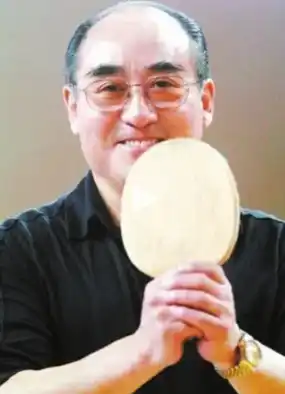
In the thirteen years since Zhuang Zedong’s passing, Atsuko Sasaki has flown from Japan to Beijing every year. She makes a point of visiting the Fenghuangshan Cemetery in Changping on the anniversary of his death to carefully wipe down his tombstone and bring him the Beijing snacks he loved most during his lifetime. She has also taken up the cause he left unfinished,volunteering to teach children how to play table tennis and, bit by bit, carrying on and passing on his passion for the sport.
Throughout his life, Zhuang Zedong reached heights that others could scarcely match, yet he also sank into depths where no one took notice of him; yet through it all, he remained true to his inner convictions. Through the ups and downs of his life, he gradually revealed to others what is truly worth holding onto for a lifetime.